Meet our May Change for Good Recipient
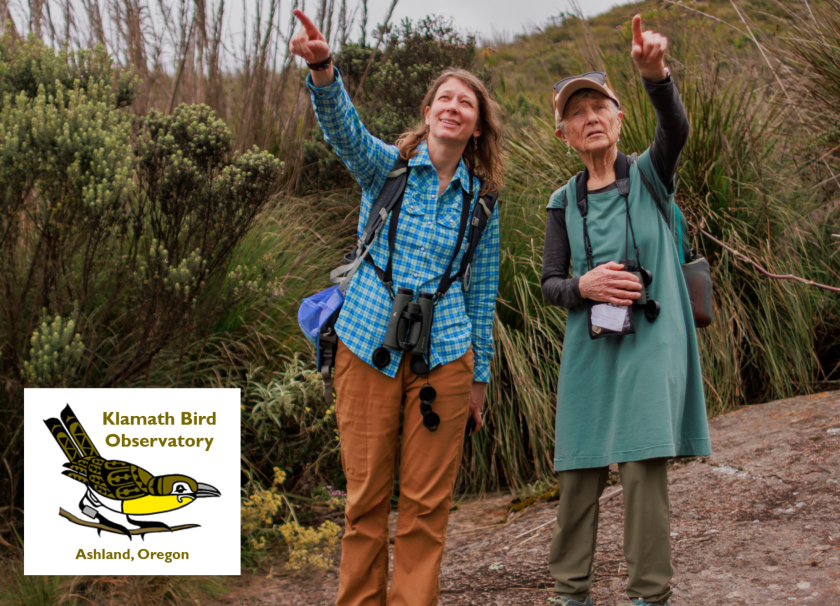
The Klamath Bird Observatory is focused on bird conservation and environmental education through ornithological practices. Emphasizing high-caliber science and the role of birds as indicators, KBO informs and improves natural resource management. Recognizing that conservation occurs across many fronts. The organization also aims to nurture an environmental ethic through community outreach and education.
"We owe our success to committed donors, volunteers, staff, and partners who demonstrate that each of us can contribute to a legacy of abundant bird populations and healthy land, air, and water." (KBO)
The Klamath Bird Observatory models conservation through three effects:
1. Long-Term Monitoring which provides information about changes in bird populations.
2. In-depth theoretical research that advances our understanding of distribution and movements.
3. Applied ecology that addresses natural resource management challenges.
This conservation science is then utilized and applied at local, regional, and even international scales:
1. Ongoing science programs inform conservation planning in the beautifully rugged and wildlife-rich Klamath-Siskiyou Bioregion of northern California and southern Oregon.
2. Avian Knowledge Northwest, KBO's interactive data center and decision support system, provides scientific resources across the Pacific Northwest.
3. Professional education and international capacity building expands our influence hemispherically with partner-driven programs that protect birds throughout their breeding, migrating, and wintering seasons.
This organization is no doubt a strong pillar in our community, ensuring even the smallest of organisms and beings are taken care of. Working within the North American Bird Conservation Initiative, Partners in Flight, and other collaborations, Klamath Bird Observatory takes a lead role in developing strategic bird and habitat conservation plans and other technical publications.
These plans are designed to (1) stimulate and support a proactive approach to conservation and offer recommendations for planning efforts and habitat management actions, (2) direct cost-effective expenditures of government and non-government organizations, and (3) stimulate monitoring and research to support conservation.
The plans’ recommendations serve as the biological foundation for developing and implementing conservation strategies for multiple bird species at multiple geographic scales.
For more information, visit www.klamathbird.org
More Co-op News
March Change for Good Partner: Southern Oregon Land Conservancy
February Change for Good Partner: Rogue Farm Corps
January Change for Good Partner: Rogue Climate
January's Change for Good Partner is
local nonprofit Rogue Climate
Rogue Climate was founded in 2013 in the Rogue Valley of Southern Oregon.

August Change for Good Partner: Community Works
August's Change for Good Partner is

November Change for Good Partner: Southern Oregon Climate Action Now
November Change for Good Partner: Southern Oregon Climate Action Now
November's Change for Good Partner is


October Change for Good Partner: AFC Gives Community Fund
October's Change for Good Partner is
September Change for Good Partner: Center for NonProfit Legal Services
September's Change for Good Partner is
Center for NonProfit Legal Services
The Center for NonProfit Legal Services has provided free/low-cost civil legal assistance to low-income persons and seniors residing in Jackson County since 1972.
August Change for Good Partner: Klamath-Siskiyou Wildlands Center
August's Change for Good Partner is
Klamath-Siskiyou Wildlands Center
(KS Wild)
KS Wild's mission is to protect and restore wild nature in the Klamath-Siskiyou region of southwest Oregon and northwest California.

July Change for Good Partner: Southern Oregon Land Conservancy
July's Change for Good Partner is
Southern Oregon Land Conservancy
Protecting and enhancing precious land in the Rogue River region
to benefit our human and natural communities since 1978

Meet the 1st Street Beet
Welcome to the newly redesigned and reimagined newsletter from the Ashland Food Co-op: 1st Street Beet.
Think of this publication as a resource to know what’s going on in every level of the community: at the co-op, around town, in the region, and on Earth!
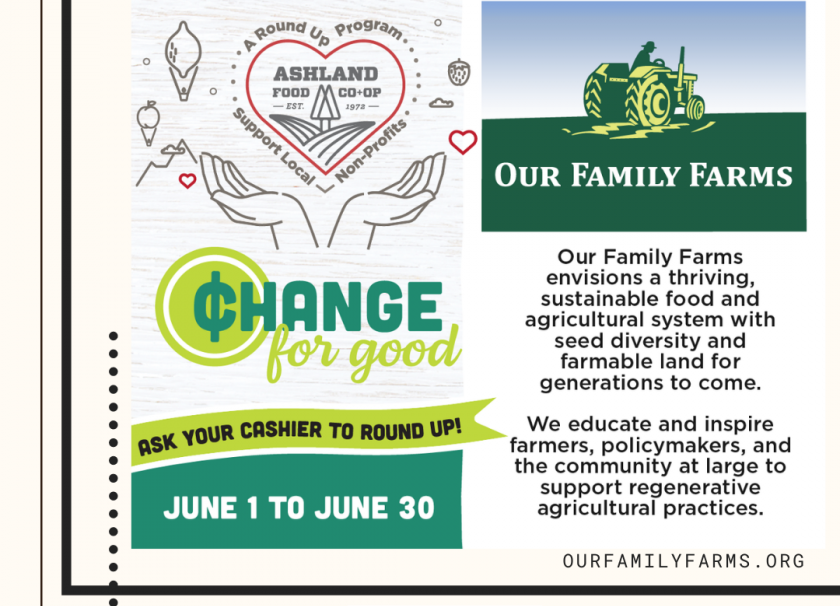
June Change for Good Recipient: Our Family Farms
June's Change for Good Recipient is
Our Family Farms, an Oregon 501(c)3 non profit organization, is hard at work educating and inspiring farmers, policy makers and the community at large to support regenerative agricultural practices.
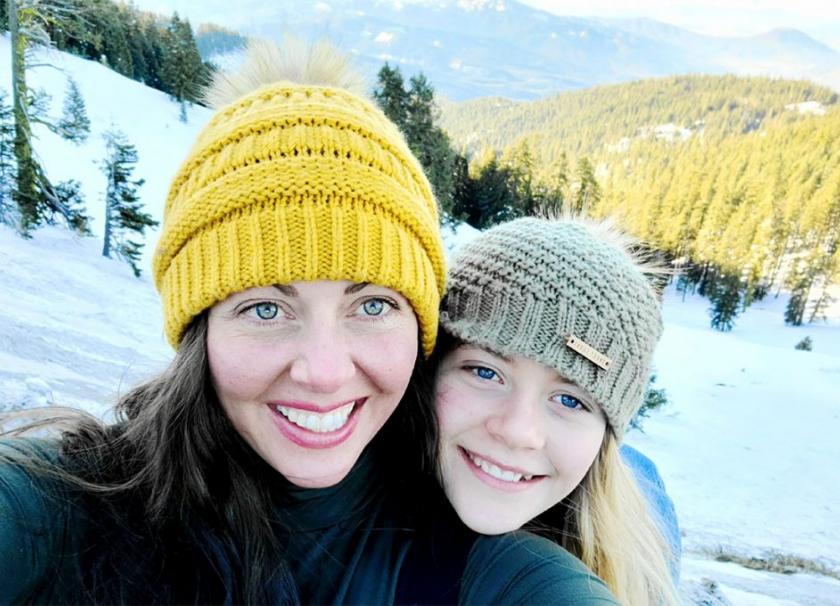
Capiche Conversations: Interview with Tracy Kaiser, Marketing & Education Manager of Ashland Food Co-op
Our own marketing manager, Tracy Kaiser, was interviewed by Melissa L. Michaels for Capiche Conversations.
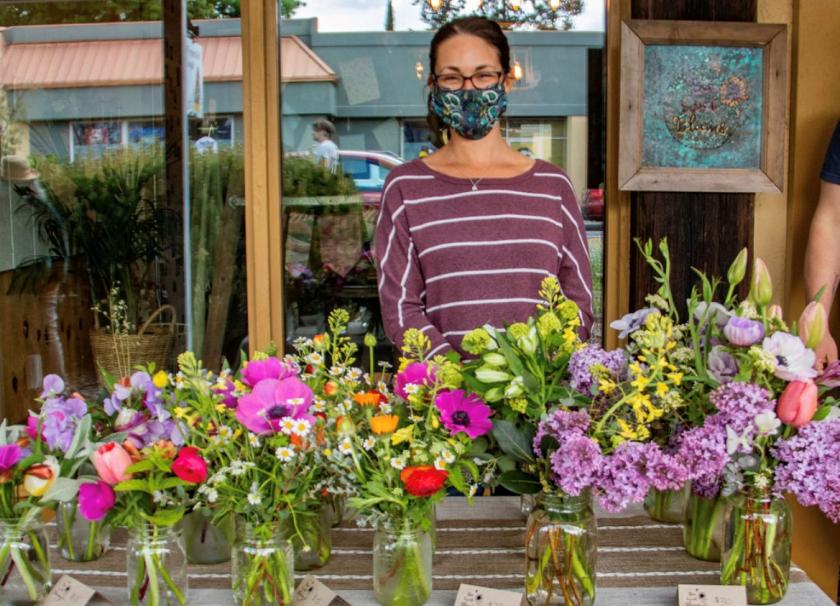
May Day Community Block Party
Photography by Chelsea Whitney Art
On May 1st, several Southern Oregon businesses came together for a block party to provide a space to gather as a community after a rough spell due to the pandemic and fires. The May Day Block Party was hosted on Main St in Phoenix, where the scent of food trucks mingled with artisan goods such as local cheeses, locally farmed flowers, and even fresh-baked pastries.