Celebrating Indigenous Food and Traditions
Each October, when so many across the country celebrate Indigenous Peoples' Day, the Ashland Food Co-op pauses to reflect on the land we call home, the people who've cared for it, and how food and connections to the land can help us return that inheritance in a positive way. This holiday isn’t just a request that we correct the record of history, but that we also plant a greater sense of home, appreciation, and responsibility. In southern Oregon, that means exploring the histories and teachings of the Shasta, Takelma, Latgawa, and other tribes whose ancestral lands include what is now Ashland.
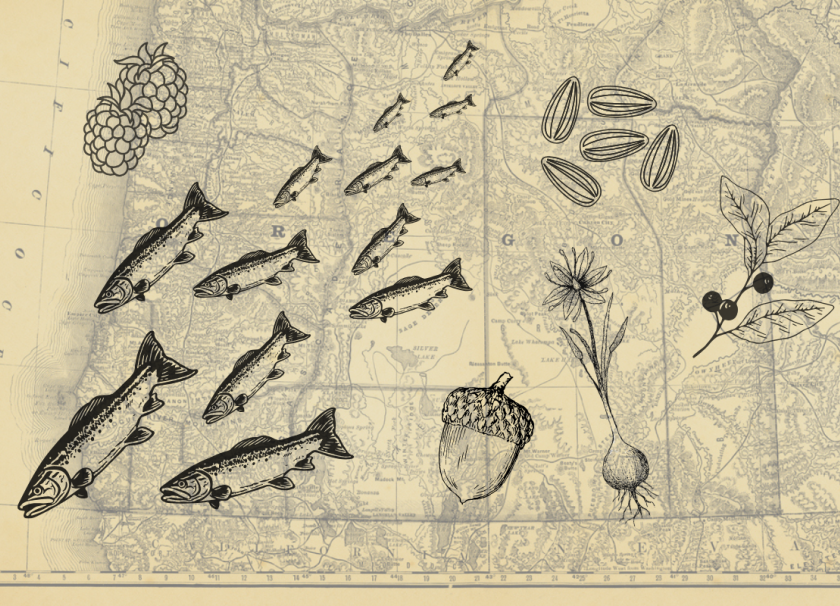
Indigenous peoples in our region lived prior to Euro-American settlement in a deep relationship with food cycles and place. In the Rogue Valley and along the Table Rocks, the Takelma were sometimes called “Dagelma,” meaning “those who dwell by the river.” Life revolved around the waters and the changing seasons. Salmon filled their nets, while wild roots, berries, seeds, and game rounded out their meals. As the seasons changed, they followed the rhythms of the land, moving between elevations to fish, gather, hunt, and carefully store what they would need for the months ahead. Their activity wasn’t just for survival, but for reciprocity: farming soils, burning to maintain open meadows, incubating plant habitats, and honoring areas of ceremony. Their ways of tending the land remind us that we still have much to learn about balance, respect, and stewardship.
Deep disruption came in the mid-1800s: the Rogue River Wars of 1855–1856, when numerous Indigenous communities were forcibly relocated, treaties were violated, and war and disease devastated populations; the brief existence of the Table Rock Reservation was formed and abolished; and numerous descendants of these groups found themselves caught up in confederated treaties or relocated to other reservations. In spite of this break, Indigenous families still reside here, remember, revive language, and preserve cultural food traditions throughout Oregon today.
Food is one of the most powerful connections we have to memory, respect, and the planet itself. Here in Oregon, "first foods" like salmon, roots, berries, and game are still central to Indigenous food sovereignty.This work in southern Oregon centers on renewal: restoring native plants, rebuilding traditional harvesting, and restoring both cultural connections and care for the earth. By the fact that co-ops are community, we can be the change by learning about Indigenous foodways, finding Indigenous-grown produce when possible, and supporting organizations that uplift Native voices.
Indigenous Peoples’ Day reminds us that honoring the past is not only about memory, but also about the actions we take today. We encourage you and our community to become conscious of whose territory you stand on, to contribute financially to Native nonprofits, and to buy at Indigenous food producers. There's something good we can do towards reciprocity, justice, and healthier relations with people and places.
Sources:
- OSF Ashland Land Acknowledgment: https://www.osfashland.org/land-acknowledgment
- BLM Table Rocks History: https://www.blm.gov/programs/recreation/recreation-activities/oregon-washington/tablerocks/cultural-history/regional-tribes
- Rogue River Wars: https://en.wikipedia.org/wiki/Rogue_River_Wars
- Table Rock Reservation: https://en.wikipedia.org/wiki/Table_Rock_Indian_Reservation
- Travel Oregon – Indigenous Foods: https://traveloregon.com/things-to-do/culture-history/celebrate-oregons-indigenous-foods/
- My Oregon – Indigenous Foodways in Southern Oregon: https://www.myoregon.gov/2022/12/20/how-indigenous-communities-are-reclaiming-knowledge-and-relationships-to-first-foods-in-southern-oregon/
More Co-op News
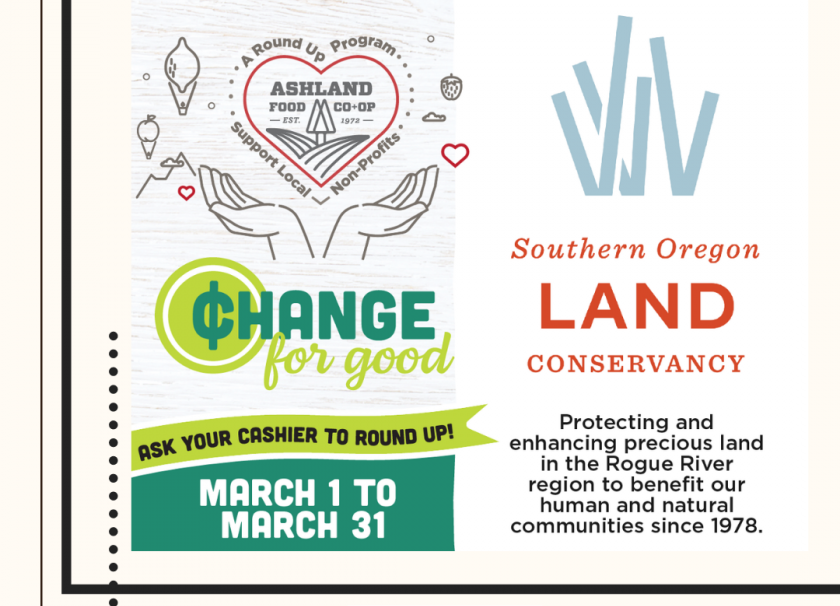
March Change for Good Partner: Southern Oregon Land Conservancy
February Change for Good Partner: Rogue Farm Corps

January Change for Good Partner: Rogue Climate
January's Change for Good Partner is

local nonprofit Rogue Climate
Rogue Climate was founded in 2013 in the Rogue Valley of Southern Oregon.

August Change for Good Partner: Community Works
August's Change for Good Partner is

November Change for Good Partner: Southern Oregon Climate Action Now
November Change for Good Partner: Southern Oregon Climate Action Now
November's Change for Good Partner is


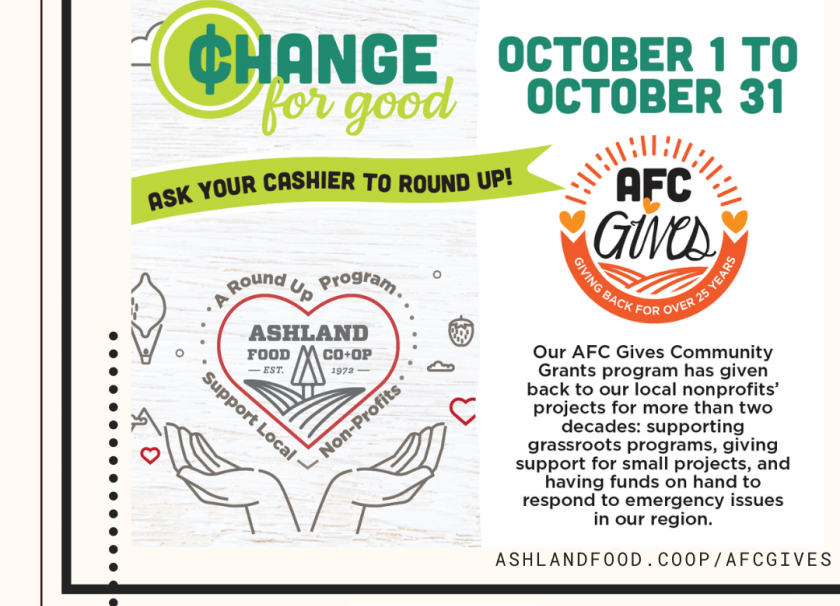
October Change for Good Partner: AFC Gives Community Fund
October's Change for Good Partner is
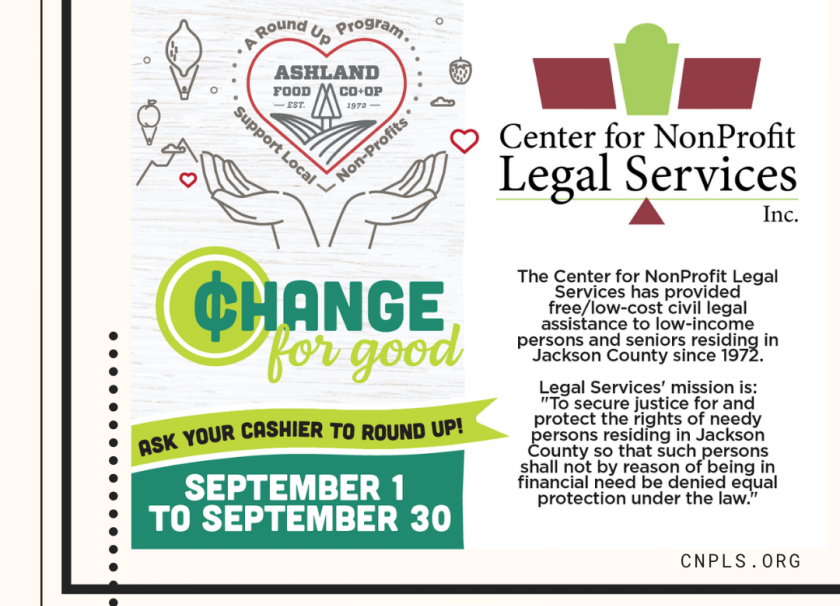
September Change for Good Partner: Center for NonProfit Legal Services
September's Change for Good Partner is
Center for NonProfit Legal Services
The Center for NonProfit Legal Services has provided free/low-cost civil legal assistance to low-income persons and seniors residing in Jackson County since 1972.
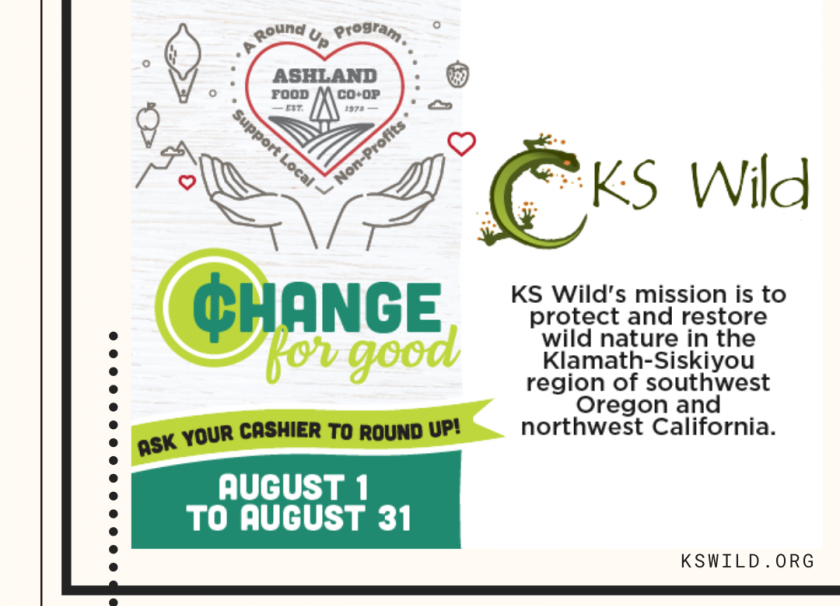
August Change for Good Partner: Klamath-Siskiyou Wildlands Center
August's Change for Good Partner is
Klamath-Siskiyou Wildlands Center
(KS Wild)
KS Wild's mission is to protect and restore wild nature in the Klamath-Siskiyou region of southwest Oregon and northwest California.

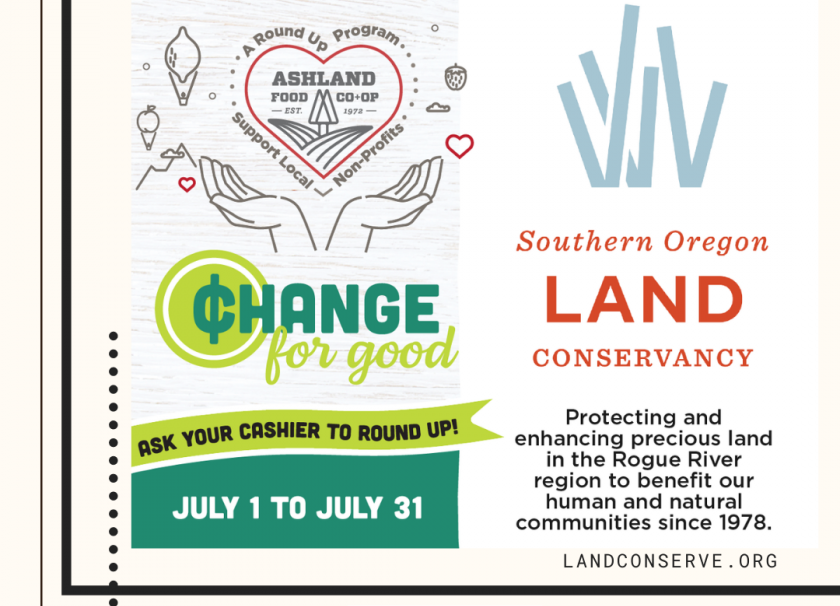
July Change for Good Partner: Southern Oregon Land Conservancy
July's Change for Good Partner is
Southern Oregon Land Conservancy
Protecting and enhancing precious land in the Rogue River region
to benefit our human and natural communities since 1978
Meet the 1st Street Beet
Welcome to the newly redesigned and reimagined newsletter from the Ashland Food Co-op: 1st Street Beet.
Think of this publication as a resource to know what’s going on in every level of the community: at the co-op, around town, in the region, and on Earth!
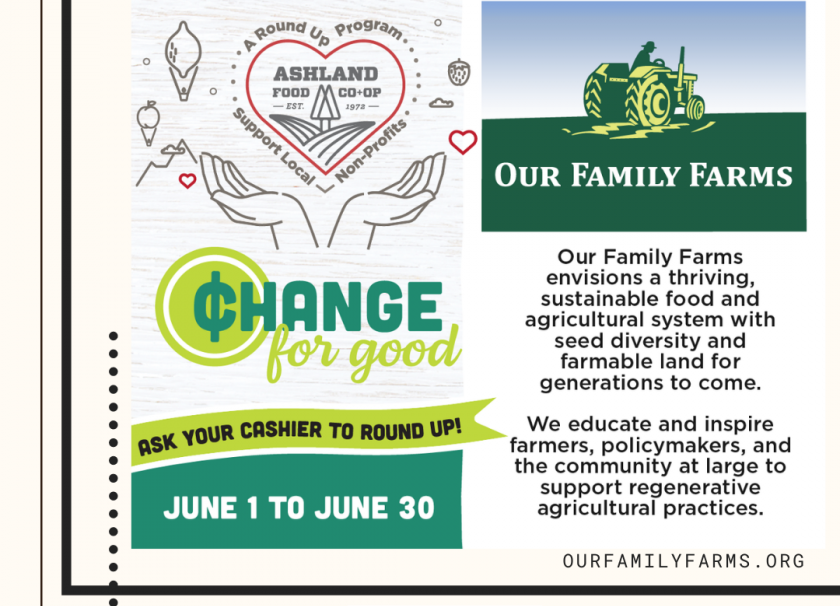
June Change for Good Recipient: Our Family Farms
June's Change for Good Recipient is
Our Family Farms, an Oregon 501(c)3 non profit organization, is hard at work educating and inspiring farmers, policy makers and the community at large to support regenerative agricultural practices.
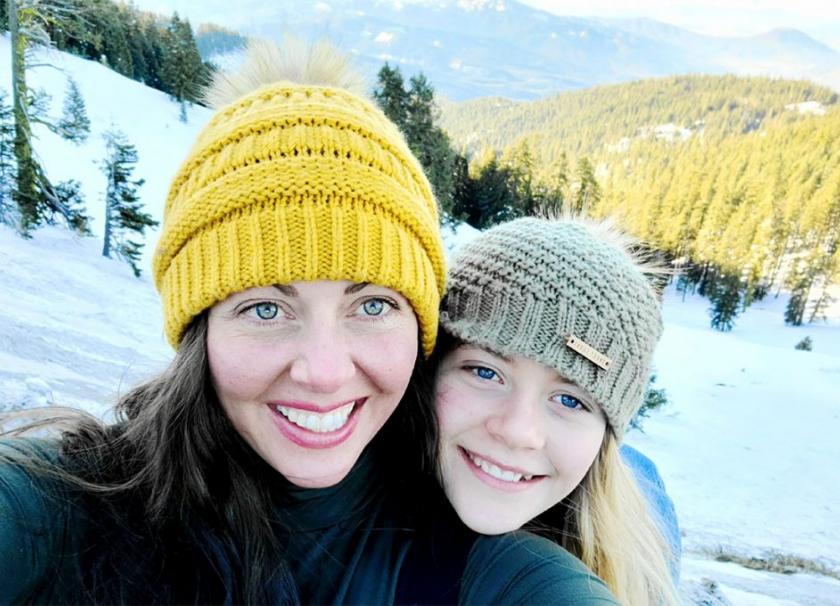
Capiche Conversations: Interview with Tracy Kaiser, Marketing & Education Manager of Ashland Food Co-op
Our own marketing manager, Tracy Kaiser, was interviewed by Melissa L. Michaels for Capiche Conversations.
May Day Community Block Party
Photography by Chelsea Whitney Art
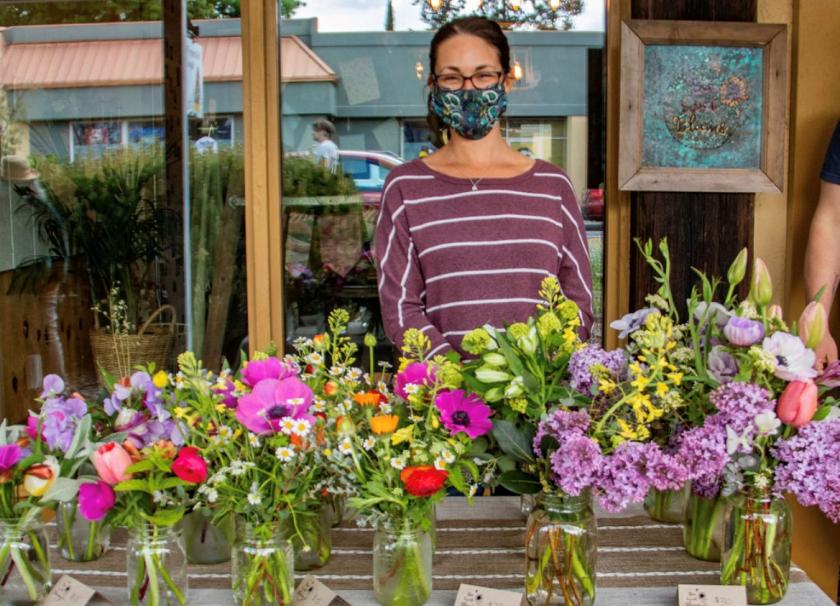
On May 1st, several Southern Oregon businesses came together for a block party to provide a space to gather as a community after a rough spell due to the pandemic and fires. The May Day Block Party was hosted on Main St in Phoenix, where the scent of food trucks mingled with artisan goods such as local cheeses, locally farmed flowers, and even fresh-baked pastries.